Integrating Automation Into Your Existing Operations — A Step-by-Step Approach
Legacy systems often create bottlenecks that slow throughput, increase errors, and drive up costs. Still, you might delay automation because large-scale upgrades feel risky. Downtime and major capital investment are genuine concerns.
Modern automation doesn’t require you to replace everything at once. Integrating automation into your existing operations in a staged approach reduces risk and often results in a higher return on investment. You can expand by introducing new systems in manageable phases that work alongside your current equipment and workflows.
Solutions in Action helps our clients integrate automation through a practical, step-by-step process that fits their operations and budget.
A 5-Phase Roadmap for Integrating Automation Into Existing Operations
Integrating new technology with your legacy systems is easier when you focus on one area before expanding to others.
Break the automation implementation process into separate steps and tackle a single controlled segment at a time. You can keep your existing operations moving while you build momentum toward rolling out facility-wide automations.
Each phase in the automation integration strategy limits risk by generating quick results that naturally lead into the next stage.
1. Assess and Identify Your Automation Opportunity
Start with a detailed site audit that maps current material flows across:
Receiving docks
Storage areas
Picking zones
Packing stations
Outbound shipping
Understanding how products move through your facility reveals where the delays and inefficiencies are. Look for bottlenecks such as manual pallet delayering, slow order picking, excessive walking for retrieval, or error-prone labeling in high-volume e-commerce or third-party logistics environments.
Identifying pain points helps you prioritize where automation would deliver the fastest returns. Choose one contained, high-impact process like inbound singulation or outbound sortation as a low-risk pilot.
2. Plan and Design a Scalable Integration Blueprint
Define KPIs for the pilot, such as increases in cartons per hour, reductions in order fulfillment error rates, or labor hours saved per shift. Measurable targets help you prove value and build the case for your redesign.
Design modular solutions that address the targeted bottleneck while including interfaces for future connections to a warehouse management system or enterprise resource planning system. Scalability matters when you want each phase to integrate smoothly with what comes next.
An early workforce communication plan explains upcoming changes and highlights reduced physical strain in tasks like heavy lifting or repetitive movements. Your automation integration strategy should address technical and human factors from the start.
3. Implement and Integrate With the Turnkey Installation Process
Turnkey installation manages the full sequence, including:
Equipment procurement
Mechanical and electrical setup
Controls programming
Software integration
Testing
Commissioning
You get a complete solution without coordinating multiple vendors. Schedule the work in short off-peak windows or parallel to live operations so production picking or shipping lines experience minimal interruption.
Industrial automation integration works best when it doesn’t force extended shutdowns. Installation physically connects new automation equipment with the current facility layout and legacy equipment. Proper integration enables new systems to communicate with existing ones.
4. Measure and Validate Results at Each Stage
Track the KPIs you set in planning using real-time data from integrated systems to calculate gains like faster pallet throughput or reduced picking errors. The numbers prove whether the pilot delivered what you expected, and validation at each stage builds confidence for the next.
Document specific improvements, such as high storage density or lower manual handling incidents. Promising early results demonstrate that improving efficiency with automation systems delivers measurable returns, not just theoretical benefits.
5. Scale and Expand Automation Across Your Operations
Use the pilot’s proven processes, data templates, and integration patterns as the model for rolling out to additional zones or lines. Repeating what worked reduces planning time and implementation risk.
The initial project becomes the foundation for broader coverage. Using the results, build a facility-wide strategy. Integrating automation solutions for existing processes becomes easier once you’ve established a successful baseline.
Continuous improvement keeps your systems aligned with evolving operational demands, so create repeatable evaluation cycles that support ongoing refinement as volumes or product mixes change.
High-Impact Starting Points for Legacy Operations
Targeted applications are excellent first projects because they integrate cleanly with existing infrastructure, delivering measurable relief in common legacy pain points. Process automation for manufacturing or warehouses becomes practical when you start with proven applications.
Consider this your warehouse automation implementation guide to help you see a return on your investment as soon as possible.
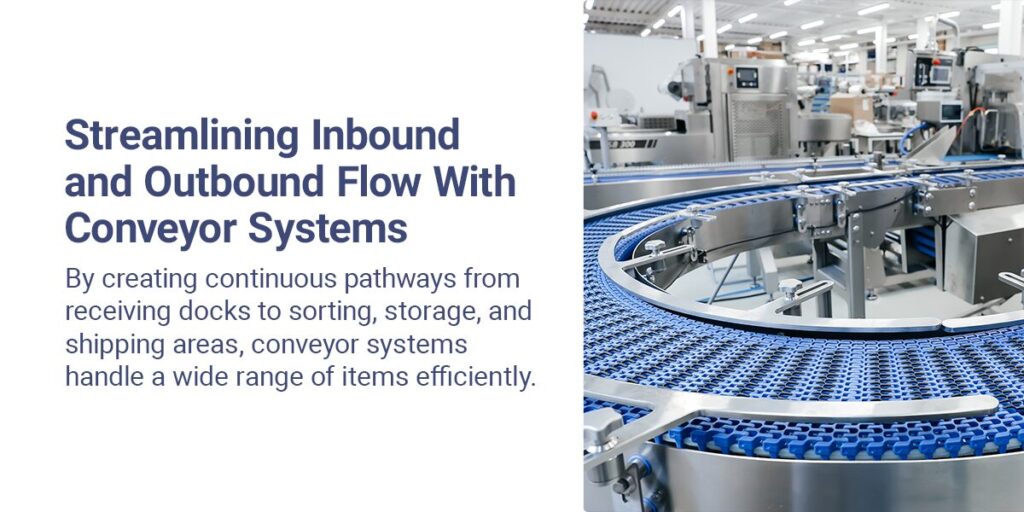
Streamlining Inbound and Outbound Flow With Conveyor Systems
By creating continuous pathways from receiving docks to sorting, storage, and shipping areas, conveyor systems handle a wide range of items efficiently. Conveyors eliminate fragmented manual transport and reduce product damage.
High-speed flow becomes achievable in e-commerce fulfillment and distribution centers when material moves automatically rather than through forklifts or manual carts.
Increasing Accuracy and Throughput With Robotic Palletizing
With consistent patterns and high speed, robotic palletizing automates the stacking of cases and products onto pallets. Robots handle the repetitive manual stacking of materials and items that commonly cause injuries in food and beverage, automotive, and manufacturing environments.
Workers who move away from physically demanding tasks can then transition to oversight roles that reduce strain and injury risk. Process automation often begins here because palletizing offers immediate, visible labor savings.
Optimizing Storage and Retrieval With Automated Systems
When vertical storage replaces horizontal layouts, space becomes more productive. Warehouses can hold more inventory on vertical shelving, and automated storage and retrieval systems make retrieval easy and safe.
Implementing an AS/RS system is a valuable step for warehouses with limited floor space. In storage spaces where manual retrieval would cause delays and create operational challenges, inventory accuracy improves when robotic picking replaces human labor.
Improving Order Fulfillment With Pick-to-Light and Warehouse Execution Systems
Pick-to-light systems use LED displays to guide workers to exact item locations and quantities. Visual cues eliminate guesswork and reduce picking errors that lead to returns or rework.
A warehouse execution system or warehouse control system coordinates real-time workflows across picking, packing, and shipping for higher accuracy in retail and e-commerce operations.
Overcoming Common Challenges in a Phased Automation Project
It’s natural for staged integration plans to encounter obstacles, but the automation implementation process succeeds when you anticipate and proactively address challenges instead of reacting to them mid-project.
Gaining Buy-In From Your Existing Workforce
Understanding how to implement automation in business includes addressing workforce concerns directly and transparently. Buy-in comes from showing people what they gain, not what changes.
One of the first things to communicate is how automation removes tedious manual tasks, such as heavy lifting or delicate handling. Framing the change around reduced physical demands helps workers see automation as support rather than replacement.
Emphasize safer conditions and opportunities for workers to move into high-value roles like system monitoring and oversight. By positioning new tools as support that augments the team’s existing skills, you reduce resistance.
Managing Data and Integration With Legacy Equipment
Modern integration services use specialized controls and middleware to connect new automation with older machinery and existing software platforms. In many cases, you don’t have to replace functional equipment that still delivers value.
Industrial automation integration extracts maximum performance from assets already in place across manufacturing and warehousing facilities. Working with a partner experienced in mixed-age environments makes bridging old and new systems straightforward.
Justifying Cost and Calculating Long-Term ROI
Evaluate total returns by factoring in the reduction in labor hours, less error-related rework, increased daily throughput, and fewer safety incidents. A comprehensive analysis shows value beyond equipment cost alone.
Besides immediate benefits, include long-term advantages such as easier preventive maintenance and the ability to scale with growing order volumes. Improving your business’s efficiency with automation systems delivers compounding benefits that accumulate over the years, not just up-front savings.
Get Started With a Phased Automation Plan From SIA
A phased implementation makes automation achievable for operations of any size. SIA provides consultative assessment, controls integration, turnkey installation, and ongoing maintenance support. We bring analytical expertise to design systems that meet your operational needs while protecting your resources and investment. Contact us today to start integrating automation into your workflows.